0%

Picking the best laser welding robots for 2026, especially if you're a global buyer, isn't just about looking at things like speed, payload, or laser power. A good laser welding robot has to do more than that—it needs to produce stable weld seams, deliver consistent penetration, and keep up with long production runs without messing up. Plus, it should fit your factory’s materials, joint designs, safety setup, and maintenance skills. Honestly, there’s a lot to consider.

Professor John C. Ion, a well-respected expert in laser processing, reminds us: “The laser is just a tool, not a process.” That hits home. Sure, a robot from brands like FANUC, ABB, KUKA, or Yaskawa might have great motion control, but the real magic happens when everything’s put together—the whole welding system. That includes the laser source, optics, wire feeder, sensors, fixtures, programming, and even how well your team can operate it. All these pieces come together to make or break your final weld.

And you know what? Real factory tests really show the difference.

Don’t just settle for a quick demo—ask for samples welded with your own steel, aluminum, or stainless steel parts. Check out things like bead width, distortion, spatter, cycle times, and how often repairs are needed. Sure, brands like IPG Photonics and TRUMPF may give you top-notch laser tech, but if the system doesn’t integrate well, the practical value tanks.

No one-size-fits-all list exists. A robot that’s great for auto manufacturing might not do so hot on irregular frames or low-volume jobs. And sometimes, a cheaper system might need more manual tweaks than you’d expect—which is a detail you don’t want to overlook.

This guide is all about helping international buyers compare the top options out there. We look at welding quality, how flexible the automation is, software, service coverage, safety standards, and overall ownership costs. The goal isn’t to crown a single champion for everyone. Instead, it’s about finding the right Laser Welding Robot that fits YOUR specific production needs and situation.

2026 Best Laser Welding Robots for Global Buyers

What Is a Laser Welding Robot?

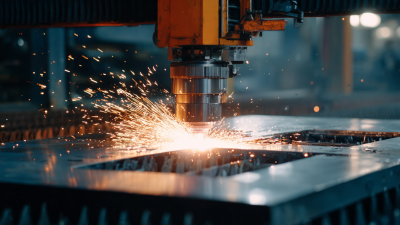
A laser welding robot is an automated system that joins metal parts with a focused laser beam. It combines a robotic arm, laser source, controller, safety enclosure, and welding software. The robot moves the beam along a programmed path with precise speed and position control. The laser melts a narrow area, creating a strong joint with limited heat spread. The joint cools quickly. Small beam, precise result.

In production, operators load parts into fixtures and select a verified welding program. Vision sensors may locate edges, holes, or small assembly differences. Clamps keep the workpiece stable during movement. This process can improve repeatability for vehicle parts, cabinets, pipes, and other metal assemblies. However, automation does not remove every production risk. A robot cannot correct poor material fit, dirty surfaces, or weak fixture design.

Practical integration requires more than choosing a high-power laser. Engineers should test material thickness, reflective surfaces, joint gaps, shielding gas, and travel speed. Weld samples need visual and mechanical inspection before full production. Early trials often expose unexpected distortion or incomplete penetration. Not every shiny weld is strong. A reliable system also needs guarded access, operator training, maintenance records, and documented parameter control. These details may seem slow, but they protect quality when thousands of welds repeat each day.

How Laser Welding Robots Work

2026 Best Laser Welding Robots for Global Buyers

How Laser Welding Robots Work

A laser welding robot joins metal by directing concentrated light onto a prepared joint. The beam melts a small area, creating a controlled weld pool. The robot arm moves along a programmed path with consistent speed and position. The beam stays focused.

A typical system includes a laser source, focusing head, motion controller, shielding gas, and safety enclosure. Sensors may check joint location, height, or temperature during production. Operators select power, travel speed, focal position, and gas flow for each material. Steel, aluminum, and stainless steel can require very different settings. Even a clean-looking joint may contain hidden defects.

Before production, technicians inspect material thickness, edge preparation, clamping, and surface condition. Oil, dust, or a small gap can weaken the weld. Test coupons help confirm penetration and bead appearance. Small errors matter. Excessive power can burn through thin sheet, while insufficient energy may create poor fusion. These problems are not always visible immediately.

In a working cell, the controller coordinates robot movement with laser emission. Interlocks stop operation when the enclosure opens or a monitored condition changes. Proper ventilation and trained supervision remain essential. Automation improves repeatability, but it does not remove responsibility. In practice, the process is more sensitive than many sales descriptions suggest. Calibration, preventive maintenance, and periodic weld inspection keep results reliable across long production runs.

Key Types of Laser Welding Robots

2026 Best Laser Welding Robots for Global Buyers

Key Types of Laser Welding Robots

Robot selection starts with the joint, not the sales brochure. The International Federation of Robotics reported 541,302 industrial robot installations in 2023. That scale reflects wider automation demand, but it does not prove every process needs a robot.

Six-axis articulated robots suit curved seams, changing angles, and large three-dimensional assemblies. They offer broad reach and flexible torch positioning. Cartesian or gantry robots fit long, straight welds on frames, panels, and heavy structures. Their motion is predictable. SCARA systems can handle smaller parts quickly, although their welding envelope is limited.

Collaborative laser welding robots work near operators, but risk assessment remains essential. Laser shielding, access control, and validated sensing cannot be treated as optional. Hybrid laser-arc systems combine a focused laser with an electric arc. They can tolerate wider gaps, which helps when stamped parts are not perfect. That tolerance often matters more than headline speed.

MarketsandMarkets’ 2024 laser welding assessment projects strong global growth through 2029. Buyers should still challenge optimistic capacity figures. A published cycle time may exclude loading, inspection, cleaning, and repositioning. In practical trials, measure penetration, distortion, repeatability, and uptime on real materials. The categories overlap. That is normal. A gantry robot may outperform a six-axis model on one line, while failing on another. Calibration records, operator training, and compliance with applicable laser-safety and robot-safety standards provide stronger evidence than impressive demonstrations.

Essential Features for Global Buyers

2026 Best Laser Welding Robots for Global Buyers

Global buyers need more than laser power. They need stable performance across materials, operators, and factory conditions. The International Federation of Robotics reported 541,302 industrial robot installations worldwide in 2023. This growth increases demand for reliable welding automation, especially in high-volume production.

Essential Features for Global Buyers

A strong laser welding robot should combine accurate motion control with real-time weld monitoring. Vision guidance can detect joint gaps, while thermal sensors help identify unstable penetration. Buyers should also check beam quality, power control, cooling design, and compatibility with stainless steel, aluminum, and coated parts. Small details matter. Cable routing, access doors, and fixture changeover often affect daily productivity more than advertised speed.

Safety and service deserve equal attention. ISO 10218 guidance emphasizes risk reduction, protective systems, and controlled robot operation. Laser equipment should include interlocked enclosures, emergency stops, clear status signals, and documented safety procedures.

Electrical and laser classifications must match the destination market. Regional conformity requirements can differ, so technical files should be reviewed before shipment. The IFR report shows strong global automation growth, but market reports on laser welding value vary widely because they use different definitions. That uncertainty deserves caution.

Buyers should request sample welds, cycle-time records, maintenance intervals, training plans, and spare-part availability. A fast demonstration is useful, but long-term support is the real test.

How to Compare Performance, Cost, and Safety

2026 Best Laser Welding Robots for Global Buyers

How to Compare Performance, Cost, and Safety

Performance should be measured on your actual parts, not a showroom sample.

In practical trials, record weld speed, penetration depth, heat distortion, and repeatability. A fast cycle means little if operators must repair uneven seams afterward. Test different material thicknesses and joint positions. Use the same wire, shielding gas, and laser settings during every comparison. A high-speed demonstration can mislead.

Cost includes much more than the purchase price.

Compare laser source life, protective window replacement, energy use, fixtures, training, and maintenance response. A cheaper system may become expensive when spare parts arrive slowly. Calculate cost per acceptable weld over several years. I would still leave room for uncertainty, because production volumes often change.

Safety needs equal attention.

Inspect enclosure design, interlocks, emergency stops, fume extraction, and access controls. Confirm that risk assessments and operating procedures match the installation site. Operators should understand reflected laser hazards and receive documented training. Reliable suppliers provide manuals, maintenance records, and measurable acceptance criteria. Never accept safety claims without evidence.

Tips:

Request sample welds from your own components. Check cross-sections, tensile results, and visual consistency. Ask for cycle-time data with loading and inspection included, not only robot movement time.

Industry Applications and Selection Guidelines

2026 Best Laser Welding Robots for Global Buyers

Laser welding robots are serving more than high-volume automotive lines. They are also used for stainless-steel enclosures, aluminum frames, battery housings, agricultural equipment, and precision metal furniture. Each application demands a different balance between heat input, speed, penetration, and appearance. A thin enclosure may need low distortion, while a structural joint requires stable penetration across changing gaps.

Selection should begin with real production samples, not catalog claims. Test the robot on your actual material, joint design, surface condition, and welding position. Inspect the bead under magnification, then measure penetration, porosity, distortion, and heat tint. Small gaps can expose weak fixturing quickly. They often do.

The robot’s reach, payload, laser power, beam delivery, seam tracking, and positioner capacity must match the complete cell. A powerful laser cannot compensate for poor part presentation. Check enclosure design, fume extraction, interlocks, emergency systems, and local laser-safety requirements. Global buyers should also verify electrical compatibility, machinery documentation, operator training, spare parts, and remote service response. These details affect uptime more than impressive cycle-time figures.

I would not choose the fastest system first. A slower cell with repeatable fixturing may produce fewer rejects and simpler maintenance. Ask suppliers to document test conditions and acceptance criteria. Then review the results with operators, engineers, and safety personnel before approving the purchase.

2026 Best Laser Welding Robots for Global Buyers - Industry Applications and Selection Guidelines

Application-oriented comparison of industrial robotic laser welding configurations
Robot Category Recommended Industry Applications Typical Materials Typical Laser Power Typical Working Envelope Key Process Capability Recommended Production Profile Important Selection Criteria Indicative Suitability
High-Speed Fiber Laser Welding Cell Automotive Sheet Metal General Fabrication Carbon steel, stainless steel, galvanized steel, aluminum alloys 2–6 kW 1.4–2.6 m reach; 6-axis robot commonly used Fast continuous seam welding, low heat input, narrow heat-affected zone Medium-to-high volume production with repeatable part geometry Beam quality, seam tracking, protective-gas control, fixture repeatability, safety enclosure ★★★★★
Precision Laser Welding Robot Electronics Medical Devices Small Assemblies Stainless steel, nickel alloys, titanium, copper and thin aluminum 500 W–2 kW 0.7–1.6 m reach; high positional repeatability required Fine weld control, limited distortion, small spot sizes, programmable pulse or continuous-wave operation High-mix production requiring accurate placement and controlled thermal input Robot repeatability, optical focusing, camera magnification, power modulation, cleanliness controls ★★★★★
Heavy-Duty Laser Welding Robot Construction Equipment Rail Heavy Machinery Structural steel, high-strength steel, stainless steel, wear-resistant plate 4–12 kW 2.0–3.5 m reach; external positioner often required Deep-penetration welding, long seams, multi-axis access to large components Large weldments, long cycle times, and relatively low-to-medium product variety Robot payload, positioner capacity, laser head cooling, fume extraction, penetration monitoring ★★★★☆
Laser Hybrid Welding Robot Shipbuilding Energy Equipment Thick Sections Carbon steel, stainless steel, nickel alloys, selected aluminum alloys 3–10 kW laser plus arc welding power source 1.8–3.0 m reach; coordinated motion with positioner Laser-assisted arc welding for higher deposition rates and improved gap tolerance Thicker materials and joints where fit-up variation is greater than in precision laser welding Wire-feed synchronization, gap-bridging capability, process qualification, joint access ★★★★☆
Laser Welding Robot with Seam Tracking Automotive Components Agricultural Machinery Customized Fabrication Carbon steel, stainless steel, aluminum alloys, coated sheet metal 1–6 kW 1.4–2.5 m reach; 6-axis configuration preferred Real-time joint detection and path correction for variable part tolerances Medium-to-high mix production where fixtures cannot fully control joint location Sensor type, tracking response time, reflective-material handling, software integration, calibration process ★★★★★
Dual-Station Robotic Laser Welding Cell Automotive Parts Appliances Contract Manufacturing Carbon steel, stainless steel, aluminum, galvanized sheet 2–6 kW 1.4–2.6 m reach; two fixtures or rotary positioner Reduced idle time through simultaneous loading and welding operations High-throughput production with stable product families Changeover time, fixture interchangeability, guarding layout, loading ergonomics, cycle-time balance ★★★★★
Collaborative Laser Welding System Prototyping Job Shops Low-Volume Production Stainless steel, carbon steel, aluminum alloys, selected thin-gauge materials Typically below 2 kW, subject to risk assessment and enclosure design 0.9–1.5 m reach; lower payload than conventional industrial cells Flexible programming, quick deployment, and reduced manual handling Frequent product changes and low-to-medium production volumes Laser safety architecture, collaborative risk assessment, operator training, torch ergonomics, access control ★★★☆☆
Robotic Laser Welding and Inspection Cell Aerospace Components Battery Enclosures Safety-Critical Parts Aluminum alloys, stainless steel, nickel alloys, copper-based materials 1–6 kW, depending on material and joint design 1.2–2.5 m reach; integrated vision or post-weld inspection station Welding combined with visual, dimensional, thermal, or penetration monitoring Traceable production requiring documented quality records Data acquisition, inspection resolution, calibration traceability, MES connectivity, quality-gate logic ★★★★★
Battery and E-Mobility Laser Welding Cell Battery Trays Busbars Motor Components Copper, aluminum, nickel-plated steel, stainless steel 500 W–6 kW, selected by joint thickness and reflectivity 0.8–2.2 m reach; precision positioner and vision commonly required Low-spatter welding, controlled penetration, high-speed joining of conductive materials High-volume production with strict electrical and leak-tightness requirements Wavelength and reflectivity management, weld monitoring, fume control, electrical isolation, traceability ★★★★★
Flexible Multi-Axis Laser Welding Cell Aerospace Industrial Equipment Complex Assemblies Titanium, stainless steel, aluminum alloys, nickel-based alloys 1–6 kW 1.8–3.0 m reach; 7th axis or external track may be included Improved access to curved, angled, and multi-face joints Complex parts with multiple welding orientations and moderate production volume Reachability simulation, axis synchronization, cable management, positioner accuracy, offline programming ★★★★☆
Selection guideline: Confirm material grade, thickness, joint design, required penetration, takt time, part tolerances, fixture strategy, laser safety classification, local electrical requirements, operator training, spare-parts availability, and process validation before final procurement. Actual laser power, cycle time, reach, and achievable weld thickness must be verified through application testing.

Collision-Proof Cobot Laser Welding for Metal Fabrication: Insights from IFR World Robotics 2024 & Grand View Research

Metal fabrication is moving toward more flexible automation as manufacturers face shorter production runs, labor shortages, and rising quality expectations. The IFR *World Robotics 2024* report recorded 541,302 industrial robot installations worldwide in 2023, while the global operational stock exceeded 4.28 million units. These figures indicate strong, continuing investment in robotic production, but conventional systems can require extensive guarding and dedicated floor space. Collaborative welding machines address this limitation by combining a collaborative robot, laser-welding technology, intelligent sensing, and programmable control in one adaptable solution.

Designed for human-robot collaboration, the system can detect abnormal contact, unexpected obstacles, or changes in the work area and respond by reducing speed or stopping motion, helping minimize collision risks during setup and operation. Operators can load parts, inspect welds, or manage small-batch jobs in the same workspace, subject to appropriate risk assessment and laser-safety controls. This flexibility is particularly valuable for automotive components, electronic assemblies, hardware accessories, and customized metal fabrication. Grand View Research estimates that the collaborative robot market reached approximately USD 1.36 billion in 2023 and projects a compound annual growth rate of about 17.2% from 2024 to 2030, reflecting demand for compact, intelligent automation. With vision, force sensing, and easy programming, a collaborative welding machine can support consistent weld quality while reducing changeover time and making advanced automation more accessible to smaller workshops.

FAQS

How does a laser welding robot join metal?

It focuses intense light on a prepared joint. The beam melts a small area and forms a controlled weld pool.

What parts make up a typical laser welding system?

Common parts include a laser source, focusing head, motion controller, shielding gas, sensors, and a safety enclosure. Calibration matters.

Which materials can these robots weld?

They commonly weld steel, aluminum, and stainless steel. Each material needs different power, speed, focus, and gas settings.

Why must parts be cleaned before welding?

Oil, dust, or a small gap can weaken the joint. Clean edges and firm clamping support better penetration.

How can buyers test welding performance?

Use your own components, not only showroom samples. Check weld speed, penetration, distortion, repeatability, and cross-sections.

What hidden problems can appear in a weld?

Excessive power may burn through thin sheet metal. Low energy may cause poor fusion. Some defects remain invisible at first.

What safety features should a robot include?

Look for interlocked enclosures, emergency stops, status signals, access controls, and proper fume extraction. Reflected laser light remains hazardous.

What costs should buyers compare?

Include energy use, fixtures, training, maintenance, protective windows, spare parts, and laser-source life. Purchase price alone can mislead.

What support should a global buyer request?

Request sample welds, cycle-time records, manuals, training plans, maintenance intervals, and spare-part availability. Fast demonstrations prove little.

Does automation remove operator responsibility?

No. Trained supervision, preventive maintenance, calibration, and periodic inspection remain necessary. The process is more sensitive than it looks.

Conclusion

A Laser Welding Robot is an automated system that combines a robotic arm, laser source, control software, and welding sensors to create precise, consistent joints. It works by directing a concentrated laser beam onto the workpiece while the robot controls movement, speed, focus, and welding position. Depending on production needs, buyers may choose articulated, gantry, collaborative, or specialized robotic configurations. Each type offers different advantages in reach, flexibility, payload, workspace, and integration potential.

For global buyers, essential features include beam stability, accurate motion control, intelligent monitoring, flexible programming, reliable cooling, and strong safety protection. Comparing systems should involve welding quality, productivity, energy use, maintenance, total cost of ownership, operator training, and compliance with applicable safety requirements. Laser welding robots support industries such as automotive, metal fabrication, electronics, energy equipment, and general manufacturing. The best selection should match material type, joint design, production volume, factory layout, automation goals, and long-term service requirements.

Ethan

Ethan

Ethan is a dedicated marketing professional at Maven Laser Automation Co., Ltd., a leading manufacturer of laser systems and professional automation solutions based in Shenzhen, China. With a deep expertise in the company's product offerings, Ethan has been instrumental in promoting the innovative......
Previous 10 Best Laser Cutter Machines for Small Business?