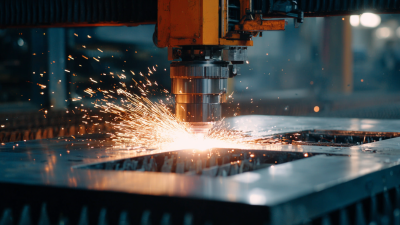
When you start looking into advanced manufacturing methods, one name that really stands out is the Laser Welder. It’s known for being super precise and efficient, which is a huge plus. These days, industries are leaning more and more towards innovative solutions, and a dependable Laser Welder can seriously boost productivity while also making the welds look better. The cool thing is, these machines are built to give you incredible control over the welding process—something that's especially helpful when dealing with tough or demanding environments.
A lot of companies, like Precision Welding Solutions, have already made the switch and are seeing great results. They've managed to cut down cycle times and reduce waste quite a bit. But, honestly, picking the right Laser Welder isn’t always straightforward. Things like what material you're working with and how thick it is really matter when deciding which system fits best.
That said, Laser Welders do come with a bit of a learning curve. It’s important to invest some time in training and getting the hang of things to really unlock their full potential. Plus, companies need to weigh the upfront costs against the long-term benefits. Taking a thoughtful, considered approach when adopting laser welding tech can really lead to some serious advancements and improvements.

Advantages of Laser Welding Over Traditional Welding Methods
Laser welding has revolutionized the manufacturing landscape, offering distinct advantages over traditional welding methods. According to a report by the American Welding Society, laser welding can achieve a weld speed up to five times faster than conventional methods. This rapid speed significantly enhances productivity. In industries where time is crucial, such as automotive and aerospace, efficiency is a vital factor.
Another notable benefit of laser welding is the precision it offers. A study from the International Institute of Welding indicates that laser welds can achieve accurate joint tolerances of up to 0.1 mm. This precision reduces the need for extensive finishing processes, thereby saving time and resources. Furthermore, laser welding minimizes heat-affected zones, decreasing the risk of thermal distortion in components. Yet, some manufacturers face challenges in adapting to this technology due to initial cost barriers and training requirements.
Despite the numerous advantages, laser welding does present some considerations. The technology may require highly skilled operators to achieve optimal results. Additionally, the selection of materials for laser welding can be limited compared to traditional welding. This can impact decisions for complex assemblies. As industries continue to evolve, weighing these pros and cons becomes essential for manufacturers considering laser welding for their projects.
Precision and Accuracy: Key Benefits of Laser Welding
Laser welding has gained traction in manufacturing due to its high precision and accuracy. A study by the National Institute of Standards and Technology highlights that laser welding can achieve tolerances as tight as 0.01 mm. This level of accuracy is essential in sectors like automotive and aerospace, where even minor discrepancies can lead to failures.
Moreover, laser welding minimizes thermal distortion. According to the Journal of Materials Processing Technology, laser processes result in a heat-affected zone that is significantly smaller than traditional methods. This characteristic allows manufacturers to optimize their designs without worrying about unnecessary warping or deformation. However, transitioning to laser welding may require retraining staff and adjusting production lines.
The speed of laser welding also contributes to productivity. With the ability to process materials quickly, manufacturers report a reduction in cycle times by up to 50%. This improvement can boost output and help meet tight deadlines. Nonetheless, it’s important to consider the upfront investment in equipment. While the long-term benefits often outweigh these costs, careful planning is essential to ensure a smooth transition. Ultimately, understanding these factors is crucial for making informed decisions in the manufacturing landscape.
Material Compatibility: Which Materials Benefit Most from Laser Welding
Laser welding stands out for its versatility across various materials. Industries often choose laser welding for metals, plastics, and composites. According to a report by the International Institute of Welding, over 80% of manufacturers prefer laser methods for joining metals like stainless steel and aluminum. These materials exhibit excellent energy absorption, enhancing the overall welding process.
Plastics also benefit significantly from laser welding. Research indicates that laser welding achieves high precision and minimal thermal distortion. A study from the Society of Automotive Engineers points out that laser welding is specifically advantageous for joining thermoplastics. Their fast processing time improves production efficiency, making it appealing for many applications.
However, not all materials are optimal for laser welding. Some materials may require further analysis to ensure compatibility. For instance, materials with high reflectivity can hinder effectiveness. Understanding these nuances is crucial for manufacturers. This insight allows for better decision-making and process optimization. The right material choice can lead to improved quality and durability in finished products.
Material Compatibility in Laser Welding
The following chart illustrates the compatibility of various materials with laser welding technology. The data represents the effectiveness of laser welding on different materials, helping manufacturers make informed decisions based on material properties.
Cost-Effectiveness: Analyzing Long-Term Savings with Laser Welders
Laser welding has become a popular choice in manufacturing due to its impressive cost-effectiveness. Unlike traditional welding methods, laser welders require less energy, which leads to substantial savings in electricity costs over time. The precision of laser welding reduces material waste. This efficiency translates into long-term financial benefits for manufacturing operations.
Another significant factor is the minimal maintenance required for laser welding equipment. While the upfront costs might be higher, the reduction in repair and upkeep expenses is notable. Manufacturers may find themselves spending less on consumables, which are often needed frequently in conventional welding. This means lower operational costs as the technology ages.
However, there are some challenges to consider. Not all materials are suitable for laser welding, and specific training may be needed for staff. Understanding how to maximize the potential of this technology is crucial. While the advantages are compelling, a thoughtful approach to implementation is necessary. The goal should be to weigh both the immediate costs and the long-term savings for sustainable manufacturing success.
Speed and Efficiency: How Laser Welding Accelerates Manufacturing Processes
Laser welding stands out in modern manufacturing due to its
speed and efficiency. This advanced technique uses focused laser beams to join materials quickly. Traditional welding can
be slow and cumbersome, often requiring significant setup time. In contrast, laser welding reduces this time
drastically. It allows production lines to operate smoothly without long delays.
One key advantage is precision. Laser welding can target specific
areas with incredible accuracy. This reduces the chances of errors, which is a common issue in conventional methods.
Efficiency also means less material waste. This is especially important for manufacturers looking to optimize resources.
Reducing waste leads to cost savings and a smaller environmental footprint.
However, transitioning to laser welding isn't always seamless. Teams need specialized training to use the machines
effectively. There can be a learning curve, which might slow initial productivity. Companies must also assess their
existing processes. Sometimes, integrating new technology requires adjustments. Still, the benefits of speed and
precision often outweigh these challenges, making laser welding a worthy investment for improving manufacturing operations.
Environmental Considerations: The Eco-Friendly Aspects of Laser Welding
Laser welding is becoming a popular choice in manufacturing, not just for its efficiency but also for its environmental benefits. This technology produces minimal waste compared to traditional welding methods. The precision of laser welders means less material is needed. This can significantly reduce scrap and leftover materials.
Consider the energy efficiency of laser welding. It requires less energy to operate, leading to lower greenhouse gas emissions. This is an important factor for businesses aiming to reduce their carbon footprint. Moreover, laser machines can often operate in a more compact space, minimizing the environmental impact of the manufacturing facility itself.
Tip: Look for ways to optimize laser welding in your processes. Training your staff on best practices can enhance efficiency. Regular maintenance of equipment is crucial. This ensures that the machinery operates at peak performance, reducing energy consumption and waste. Embrace the change but reflect on the current processes; there's often room for improvement.
Future Trends: Innovations in Laser Welding Technology for Manufacturers
Laser welding technology is changing the landscape of manufacturing. Recent innovations have significantly improved precision and efficiency. Manufacturers need to adapt to these advancements to stay competitive. New laser systems offer enhanced control features. This allows for greater accuracy in intricate designs. As industries demand higher quality, these technologies can meet the expectations.
Automation is another vital trend in laser welding. Integrating AI with laser systems boosts productivity. It optimizes energy usage and reduces operational costs. However, this shift raises questions about workforce adaptability. Employees may need retraining for effective operation of AI-driven systems. Human oversight remains crucial to ensure quality standards are maintained.
Additionally, sustainability in manufacturing is gaining attention. Innovations in laser welding can reduce waste. Less energy is consumed compared to traditional methods. This efficiency aligns with the growing demand for eco-friendly practices. As industries evolve, the focus on sustainable solutions will likely increase. Manufacturers should consider how these changes can impact their operations.
Why Choose a Laser Welder for Your Manufacturing Needs? - Future Trends: Innovations in Laser Welding Technology for Manufacturers
| Feature |
Benefits |
Future Trends |
| High Precision |
Minimizes heat affected zone, resulting in cleaner welds. |
Integration with AI for improved accuracy and real-time adjustments. |
| Versatility |
Can work with various materials like metals and plastics. |
Development of multi-material laser systems. |
| Automation Integration |
Reduces labor costs and increases production speed. |
Further advancements in robotics for autonomous welding. |
| Energy Efficiency |
Lower energy consumption compared to traditional welding methods. |
Emerging eco-friendly technologies in laser generation. |
| Minimal Heat Input |
Reduces distortions and allows for thinner materials. |
Advancements in fiber laser technology enhancing thermal management. |
FAQS
: Metals like stainless steel and aluminum are most suitable. Plastics, especially thermoplastics, also benefit greatly.
Laser welding uses focused beams. This allows for rapid joining of materials, speeding up production significantly.
Precision minimizes errors during the welding process. This accuracy enhances overall product quality and reduces waste.
Yes, materials with high reflectivity pose challenges. These require careful analysis before welding.
Teams often need specialized training to operate laser welding machines effectively, which can slow initial productivity.
Laser welding reduces material waste significantly. This benefits manufacturers looking to lower costs and improve sustainability.
Conclusion
Laser welders offer numerous advantages over traditional welding methods, making them an ideal choice for modern manufacturing needs. One of the key benefits is their precision and accuracy, which allows for intricate designs and tight tolerances that result in superior quality. Additionally, laser welders are highly compatible with a variety of materials, such as metals, plastics, and composites, expanding their usability across different industries.
Cost-effectiveness is another significant advantage, as laser welding can lead to substantial long-term savings through reduced material waste and faster production times. The speed and efficiency of laser welders not only accelerate manufacturing processes but also contribute to improved overall productivity. Finally, with a growing emphasis on sustainability, laser welding is recognized for its eco-friendly characteristics, such as lower energy consumption and reduced emissions. As innovations in laser welding technology continue to emerge, manufacturers are increasingly turning to this modern solution to meet their evolving production demands.