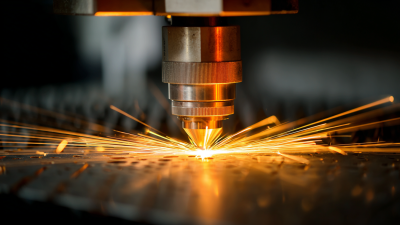
In today’s competitive world of manufacturing, picking the right technology can really make a difference. Honestly, investing in a Robot Laser Welding Machine might just be the game changer you need for your business. These machines bring a level of precision and speed that’s tough to match with manual welding — they help cut down on mistakes and speed up production quite a bit.
Now, I get it — the upfront cost can seem pretty steep at first glance. But looking at the long-term benefits, it might be worth it more than you think. Better productivity and top-notch weld quality can actually lead to happier customers and a stronger reputation. That said, it’s super important to really understand what your specific needs are — not every business is after the same level of automation.
Don’t forget to think about your team’s skills, too. Moving to automated equipment will probably mean some training and adjustments, and your employees might feel a bit uncertain about these changes. But companies like XYZ Corporation have been there, done that — they’ve successfully brought in these machines and offer ongoing support to make the process smoother.
All in all, investing in a Robot Laser Welding Machine could really push your business forward. Just make sure you plan it out carefully and consider all the factors first — it’s definitely a move worth thinking over!
Robot laser welding machines offer significant advantages for various industrial applications. Studies indicate that these machines can enhance productivity by up to 50%. This increase is primarily due to their speed and precision. Unlike traditional welding, robot laser systems provide consistent quality. They can execute complex welds that would be challenging for human operators, reducing the likelihood of errors.
In addition to boosting efficiency, robot laser welding machines are noted for their versatility. They can process various materials with different thicknesses. Industries often face the challenges of adapting to evolving manufacturing needs. For example, a report from the International Robotics Federation highlighted a trend where more than 30% of manufacturers integrate automation to stay competitive. Moreover, the equipment's ability to operate in varied environments can lead to reduced labor costs and minimize human exposure to hazardous situations.
Despite their benefits, some companies may hesitate due to initial investment costs. However, the long-term savings on labor and operational efficiency often outweigh this concern. Machine maintenance is another area that requires attention. Regular upkeep can prevent downtimes and ensure optimal performance. Industrial leaders should carefully assess their specific needs to determine the full potential of these technologies.
In recent years, the manufacturing industry has seen a significant shift towards automation, particularly in welding processes. Robot laser welding machines offer several advantages over traditional methods. According to a report by Grand View Research, the global laser welding market is projected to grow at a CAGR of 6.5% from 2021 to 2028. This growth underscores the increasing preference for automated solutions.
Robot laser welding machines provide precision. They can achieve weld seams with a tolerance of ±0.1 mm, much tighter than traditional methods. This level of accuracy is particularly beneficial in industries like automotive and aerospace, where quality standards are high. Additionally, laser welding reduces heat-affected zones, resulting in less thermal distortion. However, the initial investment in robot laser systems can be substantial, leading some businesses to hesitate.
Training is crucial when adopting new technology. Staff must be comfortable operating and troubleshooting robotic systems. Investing in training programs can pay off in the long run. Evaluate the types of materials you frequently weld. Short-run production might not justify the switch to robots, whereas high volumes usually do. Consider the integration of these systems into existing workflows, as this can present challenges. However, addressing these factors can lead to enhanced productivity and decreased costs.
Modern robot laser welding machines revolutionize manufacturing. They offer precision and speed unmatched by traditional methods. A key feature is their adaptability. These machines can handle various materials and thicknesses, making them versatile for different applications.
Speed is another crucial aspect. Laser welding significantly reduces processing times. This efficiency allows businesses to meet tight deadlines. Additionally, the quality of the welds is consistently high, minimizing the need for rework. However, setup and maintenance can be complex. Operators must have adequate training to manage the technology effectively.
The integration of advanced software enhances performance further. This software often includes features for real-time monitoring and adjustments. The result? Improved accuracy and less waste material. While these machines can be costly, the long-term savings on labor and materials can outweigh the initial investment. Reflecting on these aspects can help businesses make informed decisions.
Choosing a robot laser welding machine for your business can significantly enhance cost efficiency and return on investment. According to a report from Technavio, the global laser welding market is projected to grow by nearly $2 billion by 2025. This growth indicates a rising recognition of automation in the welding industry. With robots performing tasks, labor costs can decrease. Manual welding often requires skilled labor, which is rapidly becoming more expensive.
The initial investment in automation is often seen as a barrier. However, a study by the American Welding Society reveals that companies investing in robotic systems often see a 30-40% increase in productivity. This increase allows businesses to take on more projects and reduce turnaround times. Although implementing automation can seem daunting, the long-term savings and efficiency can outweigh these initial hurdles.
Despite these advantages, some companies still hesitate. A purely automated system may not suit every production line's needs. Customization and integration issues could lead to disruptions. Nonetheless, successful implementation can result in consistent quality and reduced rework. Thus, a careful evaluation of business needs and a strategic approach to automation can yield significant benefits.
The integration of robotics and AI in laser welding technology represents a transformative shift in manufacturing. Robots equipped with advanced AI can analyze and adjust welding parameters in real-time. This adaptability enhances precision, reducing the risk of defects. Businesses often overlook the importance of this feature, leading to inefficiencies.
Moreover, robotic laser welding machines can work continuously. They help maintain consistent quality and reduce downtime. Still, some companies may face challenges in adapting their workflows to fully harness these machines. Training staff remains a critical issue. Employees need to understand how to work alongside robots to maximize productivity.
In addition, the initial investment in technology might raise concerns. However, the long-term savings in labor and material costs often justify the expense. It's essential for businesses to weigh the potential ROI against their traditional processes. Embracing this shift requires a willingness to evolve and a commitment to continuous improvement.
Industries experiencing rapid growth are increasingly turning to robot laser welding solutions. Automotive manufacturing significantly benefits from this technology. Precision welding can enhance the structural integrity of vehicles. The ability to handle complex parts makes robot lasers ideal for producing high-quality components.
Aerospace is another sector that thrives with laser welding. As safety regulations tighten, the need for flawless joints rises. Robots offer consistent quality while reducing production time. With complex geometries in aircraft components, automated welding provides precision that manual methods often lack.
When considering robot laser welding for your operations, it's essential to evaluate your product lineup. Assess whether your industry warrants such technology. Investing without a clear application can lead to underutilization. Monitor advancements in laser technology; staying informed ensures you make decisions based on updated knowledge.
Robot laser welding technology is rapidly evolving. Businesses are discovering its vast potential beyond traditional applications. With advancements in efficiency and precision, more sectors are adopting this innovative approach. The integration of artificial intelligence enhances machine learning capabilities. This leads to smarter operational decisions and workflow optimization.
One intriguing trend is the rise of mobile robotic systems. These units can be deployed across different workstations, reducing downtime significantly. Companies are exploring automation to streamline production lines further. However, implementing such tech can pose challenges. Initial costs and workforce training require careful consideration. The need for skilled operators remains critical, even as machines become more advanced.
Another area of growth is the improvement in laser sources. Fiber lasers are becoming popular due to their energy efficiency and longevity. They can work with various materials, boosting versatility. Yet, businesses often struggle to adapt their processes to take full advantage. Understanding the unique characteristics of laser welding processes remains crucial for effective application. Balancing innovation with practical implementation challenges is essential for successful integration.
: They enhance productivity by up to 50% due to speed and precision.
It provides consistent quality and can perform complex welds, reducing errors.
They can handle various materials with different thicknesses.
Initial investment costs are a concern, but long-term savings can outweigh this.
Regular upkeep is necessary to prevent downtimes and ensure optimal performance.
Automotive and aerospace industries gain from precision and rapid production capabilities.
It minimizes human exposure to hazards and can lower labor costs overall.
Not necessarily; assess your specific needs and product lineup first.
Monitor the latest developments to make well-informed decisions regarding investments.
If the application is unclear, it may lead to underutilization of the technology.
The article explores the numerous advantages of utilizing a Robot Laser Welding Machine in various industrial applications. These machines not only enhance precision and efficiency compared to traditional welding methods but also bring significant cost savings and a strong return on investment through automation. Key features of modern Robot Laser Welding Machines include advanced robotics and AI integration, which optimize the welding process and showcase their adaptability across different industries.
Furthermore, industries such as automotive, aerospace, and manufacturing stand to gain the most from adopting these advanced solutions. The article also discusses future trends in robot laser welding technology, indicating a growing reliance on automation and smart technology to improve productivity and quality in welding applications. Overall, investing in a Robot Laser Welding Machine represents a strategic move for businesses aiming to stay competitive in a technologically evolving landscape.
Contact us
Send Inquiry:
Ready to learn more
There is nothing better than seeing the end result.
Click for inquiry