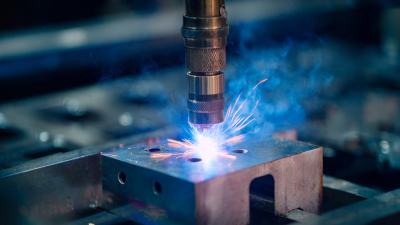
In the dynamic landscape of manufacturing, choosing the best Laser Cutting Machine for your business in 2025 is crucial for staying competitive and maximizing productivity. As technology evolves, so do the capabilities of laser cutting systems, which are essential for precision cutting, engraving, and marking across various materials. According to John Smith, a renowned expert in the laser cutting industry and the CEO of Precision Technologies, “Investing in the right Laser Cutting Machine can significantly enhance your production efficiency and product quality, making it a vital decision for any business.”
When selecting a laser cutting system, several factors come into play, including machine power, cutting speed, and material compatibility. Businesses must consider their specific needs and future growth to ensure that the equipment they choose will accommodate their operations for years to come. As Smith emphasizes, “Understanding your operational requirements and aligning them with the latest advancements in laser cutting technology is key to making an informed purchase.” In this guide, we will explore the essential criteria for evaluating laser cutting machines, helping you make a decision that aligns with your business goals in the coming year.

Understanding Laser Cutting Machine Technologies and Types
When considering the purchase of a laser cutting machine for your business in 2025, it is essential to understand the various technologies and types available in the market. Laser cutting machines primarily fall into two categories: CO2 lasers and fiber lasers. CO2 lasers are widely used for cutting non-metal materials like wood, acrylic, and textiles due to their versatility and efficiency. They operate by generating a high-energy beam that vaporizes the material upon contact, providing clean edges and intricate designs. On the other hand, fiber lasers are particularly effective for cutting metals, including stainless steel and aluminum. This technology allows for faster cutting speeds and higher precision, making it a preferred choice for industries focused on metal fabrication.
In addition to the type of laser, factors such as power output, cutting speed, and material compatibility should be evaluated. Laser cutting machines come in various power ratings, typically measured in watts, which dictates their cutting capacity and speed. A higher wattage usually results in better performance on thicker materials. Furthermore, consider the machine’s bed size and configuration, which should align with your production requirements. Integrated software capabilities can also enhance operational efficiency, enabling easier design implementation and faster job turnaround. Understanding these aspects will equip you to make a more informed decision that aligns with your business needs and growth prospects.
How to Choose the Best Laser Cutting Machine for Your Business in 2025
| Machine Type |
Laser Source |
Max Cutting Speed (mm/min) |
Material Compatibility |
Typical Applications |
Approx. Price ($) |
| Fiber Laser |
Fiber |
12000 |
Metal, Wood, Plastic |
Sheet metal fabrication, Automotive parts |
20,000 - 50,000 |
| CO2 Laser |
CO2 |
3000 |
Wood, Acrylic, Glass |
Sign making, Jewelry, Art |
10,000 - 25,000 |
| Nd:YAG Laser |
Solid-state |
1000 |
Metal, Some Plastics |
Engraving, Industrial applications |
15,000 - 30,000 |
| Ultrafast Laser |
Ultrafast |
5000 |
Glass, Ceramics, Metals |
Precision cutting, Micro-machining |
30,000 - 70,000 |
Evaluating Key Specifications: Power, Speed, and Precision
When selecting the best laser cutting machine for your business in 2025, evaluating key specifications such as power, speed, and precision is crucial. Power typically ranges from 100W to over 300W, significantly impacting the type and thickness of materials you can cut. According to a report by the International Laser Industry Group, machines operating at higher wattages are more efficient for cutting thicker materials like metals, allowing for enhanced productivity and reduced operational costs. This increase in efficiency can translate to substantial savings in material costs over time, making power a central consideration in your purchasing decision.
Speed is likewise a critical factor that influences output and turnaround times. The advancements in laser technology have led to machines capable of cutting at speeds exceeding 10 meters per minute for various materials. Research indicates that for businesses that require large-scale production, opting for a high-speed machine can reduce lead times significantly, which is essential in today’s fast-paced market. With the growing demand for rapid prototyping and just-in-time manufacturing, investing in a faster machine can yield a competitive advantage.
Precision is another dimension that can’t be overlooked. The latest laser cutting systems are designed to achieve tolerances as tight as ±0.01 mm, making them ideal for intricate designs and detailed work. Precision impacts not only the quality of the final product but also the rework and wastage rates. According to the 2023 Global Manufacturing Report, businesses that prioritize precision in laser cutting see a 40% reduction in material waste, underscoring the importance of this metric in both cost management and environmental sustainability. Therefore, evaluating these specifications attentively will help businesses choose a laser cutting machine that aligns closely with their operational goals and industry demands.
Key Specifications of Laser Cutting Machines
This chart compares the average power, speed, and precision of various laser cutting machines to help you choose the best option for your business in 2025.
Assessing Material Compatibility for Diverse Applications
When selecting a laser cutting machine for your business, assessing material compatibility is crucial to ensure that your equipment can handle the diverse range of applications you may encounter.
Different materials, such as metals, plastics, wood, and fabrics, each require specific laser types and power settings for optimal cutting. For instance, while CO2 lasers are ideal for non-metal materials, fiber lasers excel at cutting metals due to their short wavelengths and high energy efficiency.
It's essential to analyze the materials that are most frequently used in your production processes to choose a machine that can effectively work with them.
Additionally, consider the thickness and density of the materials you'll be cutting. Thicker materials require more powerful lasers and longer cutting times, which can significantly impact your production efficiency.
If your business involves intricate designs or detailed patterns, ensure that the machine's precision aligns with your requirements.
Look for features such as adjustable focus and speed settings, which can enhance the versatility of the laser cutter.
By prioritizing material compatibility and operational flexibility, you can invest in a laser cutting machine that not only meets your current needs but also adapts to future projects and expansions.
Calculating Total Cost of Ownership: Acquisition, Maintenance, and Operations
When considering a laser cutting machine for your business in 2025, evaluating the total cost of ownership (TCO) is crucial. TCO encompasses not only the initial acquisition cost but also ongoing maintenance and operational expenses, which can significantly impact your budget over time. For instance, while a machine may have a lower purchase price, it could incur higher maintenance costs or require more frequent repairs, ultimately leading to increased operational downtime and lost productivity. Calculating these costs requires a thorough understanding of the machine’s specifications, warranty terms, and availability of replacement parts.
Moreover, operational costs play a vital role in the TCO calculation. Factors like energy consumption, material waste, and labor requirements all contribute to the overall expense of running the machine. It's essential to select a model that efficiently utilizes power and minimizes waste, as these savings can accumulate significantly over the lifespan of the machine. Additionally, consider the ease of use and the availability of training resources, as these can influence labor costs and the speed at which your team can become proficient with the new equipment. By thoroughly assessing these aspects, businesses can make an informed decision that aligns with their long-term financial goals.
Analyzing Manufacturer Reliability and Support Services
When selecting the best laser cutting machine for your business in 2025, the reliability of the manufacturer and the quality of their support services are critical factors that can significantly impact your production efficiency and operational costs. According to a recent industry report by MarketsandMarkets, the global laser cutting market is expected to grow from $4.2 billion in 2020 to $8.8 billion by 2025. This projected growth underscores the importance of investing in a manufacturer that offers comprehensive support and dependable machinery.
Reliability is often measured through a manufacturer’s track record in delivering durable equipment with minimal downtime. Research by the Laser Institute of America indicates that machines requiring less frequent maintenance can increase productivity by up to 30%. It is essential to analyze the warranties and service agreements offered by manufacturers. A reputable provider will typically offer extended warranties and a clear support framework that includes training programs for your staff and responsive customer service for troubleshooting. Such commitments not only assure you of the machine’s longevity but also reflect the manufacturer’s confidence in their product.
Support services play a crucial role in maximizing the lifespan and performance of laser cutting machines. For instance, manufacturers that offer readily available spare parts and quick response times have been shown to reduce downtime by 40%, according to a study published in the Journal of Manufacturing Science and Engineering. Therefore, businesses must prioritize those manufacturers that prioritize robust after-sales support, ensuring that their operations remain uninterrupted and that any potential issues are resolved swiftly. Investing in a laser cutting machine from a reliable provider with strong support services can lead to substantial long-term benefits.
Exploring Industry Trends: Automation and Smart Technologies in 2025
As we approach 2025, the landscape of laser cutting technology will be heavily influenced by trends in automation and smart technologies. These advancements promise to enhance production efficiency, precision, and customization capabilities for businesses. Automation in laser cutting machines allows for seamless integration into existing workflows, enabling companies to reduce labor costs while increasing output. This shift not only streamlines operations but also ensures that manufacturers can meet the growing demand for rapid prototyping and mass customization.
When choosing a laser cutting machine, consider investing in models that offer smart technology features such as real-time monitoring and predictive maintenance. These capabilities not only optimize production processes but also reduce downtime significantly. For example, machines equipped with IoT technology can provide data analytics that help operators make informed decisions, ensuring that the operation remains efficient and cost-effective.
Tip 1: Look for laser cutting machines that offer easy integration with existing manufacturing systems to maximize the benefits of automation. This will help your business adapt quickly to industry trends without major disruptions.
Tip 2: Prioritize machines with user-friendly interfaces and remote operation capabilities. This will not only enhance employee productivity but also contribute to a safer working environment by reducing the need for hands-on operations.
Embracing these innovations will position your business to thrive in the competitive landscape of 2025.
Researching Customer Reviews and Case Studies for Decision Making
When selecting the best laser cutting machine for your business in 2025, researching customer reviews and case studies can provide invaluable insights. Industry reports indicate that user feedback plays a critical role in decision-making, with over 78% of businesses considering customer reviews as a significant factor in their purchasing process. These reviews often highlight not only the performance and reliability of the machines but also the support and service provided by manufacturers, which can be decisive for long-term investments.
In addition to customer reviews, examining specific case studies can offer a deeper understanding of how various laser cutting machines perform in real-world applications. According to a study published by the International Journal of Advanced Manufacturing Technology, companies that utilized laser cutting technology saw an average productivity increase of 30% and a decrease in material waste by 15%. By analyzing these case studies, potential buyers can better assess which machines meet their operational needs and how they align with the specific requirements of their industry. This empirical data can significantly enhance informed decision-making, ensuring businesses invest in equipment that will deliver optimal performance and return on investment.
Conclusion
When selecting the best laser cutting machine for your business in 2025, it's crucial to understand the various technologies and types available. Evaluating key specifications such as power, speed, and precision will help you determine the right fit for your operational needs. Additionally, assessing material compatibility is vital, as different applications may require specific cutting capabilities.
Calculating the total cost of ownership, which encompasses acquisition, maintenance, and operational expenses, ensures long-term financial viability. It’s also important to analyze manufacturer reliability and support services to guarantee ongoing assistance. As industry trends shift towards automation and smart technologies, staying informed will enhance your decision-making process. Finally, researching customer reviews and case studies can provide valuable insights that aid in making an informed choice about your laser cutting machine investment.