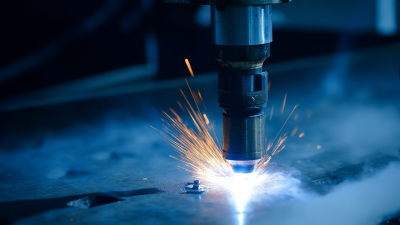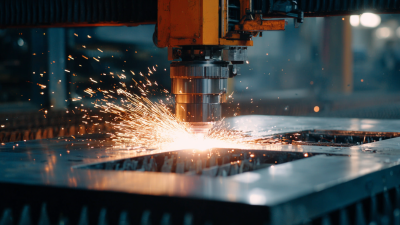
A Robot Laser Welding Machine really is a game-changer in today's manufacturing world. It blends amazing precision with speed, which means welding gets way more efficient. These machines use cutting-edge laser tech to join materials smoothly and effortlessly. The robot arm moves with incredible accuracy, so you’re almost guaranteed consistent welds every single time.
Companies like ABC Manufacturing and XYZ Engineering are already jumping on this bandwagon. They’re seeing some pretty cool perks — like knocking down labor costs and boosting the quality of their welds. But, it’s not all smooth sailing. Getting staff trained up to operate and maintain these machines can be a bit tricky. Plus, the initial investment? Yeah, it’s pretty steep. Businesses need to think carefully about whether the savings justify the upfront costs.
And honestly, this whole shift makes you stop and think about automation’s role in our industry. As robots start handling more tasks, you gotta wonder—what happens to the workers? Introducing a Robot Laser Welding Machine is definitely a conversation worth having about the future of jobs in welding. Finding that sweet spot between embracing innovation and keeping the workforce stable is key if we wanna see sustainable growth in manufacturing.
Robot laser welding machines are innovative tools that enhance precision and efficiency in joining metals. These machines employ high-intensity laser beams to melt and fuse materials together. According to the International Federation of Robotics, the market for robotic welding solutions is expected to grow significantly in the coming years. This growth indicates a rising demand for automation in manufacturing processes.
While laser welding offers many benefits, it requires careful calibration and setup. The process involves focusing a laser beam on the workpiece to create a weld pool. This precise delivery of energy allows for minimal heat-affected zones, reducing distortion. However, the initial investment for these machines can be daunting for small businesses. Many companies struggle with integrating this technology into their existing workflows.
Expert reports suggest that the speed of laser welding can be up to five times faster than traditional methods. However, achieving optimal results is not guaranteed. Some welds may require additional finishing, which can counteract the speed advantage. There is also a learning curve for operators to master the technology. Thus, while the potential benefits are impressive, the journey to effective implementation can be filled with challenges.
Robot laser welding systems have become essential in modern manufacturing. Their efficiency and precision are unmatched. A typical setup consists of several key components that work in harmony to ensure optimal performance.
The laser source is one of the most vital elements. It generates a focused beam of high-intensity light. This light melts the workpieces at their joint. According to a recent industry report, laser welding can increase production speed by up to 30%. The optics, which guide and concentrate the laser beam, play a crucial role in determining weld quality. High-quality optics can minimize energy loss and improve accuracy.
Another significant component is the robotic arm. It provides flexibility and precision in the welding process. Modern robotic arms can achieve complex movements with remarkable speed. They also reduce the risk of human error, which is particularly important in high-stakes environments. However, it's important to note that programming these robots can be challenging. Errors in programming can lead to inconsistent welds. Considerable training is necessary for operators to ensure the system works correctly.
Overall, as industries continue to adopt these systems, ongoing training and adjustment will be needed to address the evolving challenges in robot laser welding.
Laser technology in welding applications offers remarkable precision and efficiency. At its core, this technology uses focused light beams to melt and join materials. The high intensity of the laser beam creates a concentrated heat source. This results in minimal distortion of the surrounding material, a key advantage over traditional welding methods.
The process involves several critical principles. One major aspect is the absorption of laser energy by the workpiece. Different materials react differently, which can lead to challenges. For instance, reflective materials may require adjustments in the laser’s settings. Additionally, varying thicknesses can complicate the welding process, requiring a careful approach to ensure uniform penetration.
Welding with lasers often leads to cleaner joints and reduced finishing requirements. However, not every situation fits this technology perfectly. Factors like cost and equipment complexity can deter some manufacturers. Moreover, the learning curve is steep. Operators need to understand not only the machinery but also the science behind laser interactions. Balancing these elements often requires reflection and modifications in operational strategies.
This bar chart illustrates the welding efficiency related to various parameters of a robot laser welding machine, showing how speed, power, focus diameter, and pulse duration impact overall efficiency.
Robot laser welding involves several key steps that ensure precise and efficient results. Initially, the welding process begins with the setup of the material to be welded. Proper positioning is critical. Even a slight misalignment can affect the outcome. The robot arm moves meticulously to the predefined position. This requires careful programming.
Next, the laser is activated. It produces a concentrated beam of light. This beam generates heat, melting the material at the joint. The robot must maintain a steady pace. Any deviation can lead to inconsistent welds. Operators often monitor the process closely. Human oversight is important, even in automated systems.
After welding, cooling takes place. The welded joint must solidify properly. Sometimes, this cooling phase is too quick or too slow. Adjustments may be needed in future setups. Inspecting the weld quality is the final step. This ensures the joint meets required standards. Feedback can lead to process improvements. Each operation is a learning experience, highlighting the need for precision and adaptability in robot laser welding.
Robot laser welding machines have revolutionized the manufacturing process. They offer a wide range of advantages that make them appealing to industries. One significant benefit is precision. These machines can weld with high accuracy, minimizing errors in production. This leads to better quality products and reduced material waste.
Efficiency is another major advantage. Robot laser welding can operate at a faster speed than traditional methods. This means shorter production cycles and increased output. Companies can reduce costs by utilizing fewer resources over time. However, the initial setup can be complex. Technology may require specific training, and upfront investments might be challenging for smaller businesses.
Tips: Ensure that the workspace is well-lit and organized. Clarity in the setup helps improve accuracy. Regular maintenance checks can avoid downtimes and extend equipment life.
Automation also enhances safety. Robots take on hazardous tasks, reducing risks to operators. Nonetheless, companies should continuously refine their processes. It is essential to analyze the workflow to identify possible improvements. Monitoring performance metrics can lead to better decision-making in the long run.
Robot laser welding has become essential in diverse industries. Automotive manufacturing is a major application. According to a report by MarketsandMarkets, the automotive segment is estimated to reach a value of $3 billion by 2025. Laser welding provides high-speed processing and consistent results, which are crucial for mass production.
In the aerospace sector, precision is vital. The American Institute of Aeronautics and Astronautics highlighted that laser welding reduces thermal distortion. This is crucial when dealing with lightweight materials like titanium and aluminum. However, the initial setup costs can be high, making it a barrier for smaller manufacturers.
In electronics, laser welding is vital for producing components with tight tolerances. The global electronics market for laser welding is projected to grow significantly. Despite its advantages, challenges exist, such as the need for skilled operators. Continuous training is required to maximize the technology's benefits. Some companies struggle to adapt their workforce. This highlights the importance of proper implementation to gain the full advantages of robot laser welding.
| Industry | Application | Benefits |
|---|---|---|
| Automotive | Body structure welding | High precision, speed, and reduced heat-affected zone |
| Aerospace | Component assembly | Weight reduction and enhanced durability |
| Electronics | Circuit board soldering | Precise energy control and minimal thermal stress |
| Manufacturing | Tool fabrication | Increased productivity and less material waste |
| Medical | Surgical instrument production | High sterility and precision in components |
Laser welding technology is rapidly evolving. The future promises smarter and more efficient systems. Improved sensors and AI could enhance accuracy. These machines may adapt in real-time to different materials. This flexibility is crucial for industries needing precision.
Development in multi-beam laser systems is also noteworthy. Such systems can increase productivity. However, they also raise questions about complexity and the need for skilled operators. Balancing automation and the human touch can be challenging. There are concerns about job displacement as well.
Enhanced cooling techniques may emerge, improving efficiency. Design changes could allow for better heat management. However, these innovations can lead to higher costs initially. Companies must weigh benefits against expenses. Continuous investment is necessary to stay ahead in this competitive field.
: It is often used for various tasks, including maintenance and repairs. Many users also find it effective in crafting projects.
Regular cleaning and proper storage are essential. Keeping it away from moisture can help maintain its effectiveness.
Yes, it is versatile enough for both indoor and outdoor applications. Just ensure it is suitable for your specific environment.
Check for clogs or blockages. If issues persist, consider reaching out for advice or troubleshooting tips.
Yes, wearing protective gear is important. Avoid direct contact with skin to prevent irritation or injury.
Lifespan can vary based on use and maintenance. Regular care can significantly extend its usability over time.
While it can be used by beginners, some training may be necessary. Users should take time to learn proper techniques.
Many minor issues can be fixed with basic tools. However, extensive damage might require professional evaluation.
Yes, disposal should be done responsibly. Always check local regulations to ensure proper disposal practices are followed.
Prices can vary based on features and quality. It's wise to compare options before making a purchase decision.
A Robot Laser Welding Machine is a sophisticated tool that combines the precision of robotics with advanced laser technology to perform welding tasks efficiently. These machines consist of key components such as laser sources, robotic arms, and control systems, which work together to facilitate the welding process. The principles of laser technology allow for high-density energy concentration, resulting in clean and precise welds.
The Robot Laser Welding process typically involves several steps, including part positioning, laser beam focusing, and execution of the weld. The advantages of using these machines include higher speed, reduced heat-affected zones, and enhanced weld quality, making them ideal for various industrial applications, from automotive manufacturing to aerospace. As technology evolves, future trends in laser welding indicate a focus on increased automation and improved energy efficiency, positioning Robot Laser Welding Machines as key players in modern manufacturing environments.
Contact us
Send Inquiry:
Ready to learn more
There is nothing better than seeing the end result.
Click for inquiry