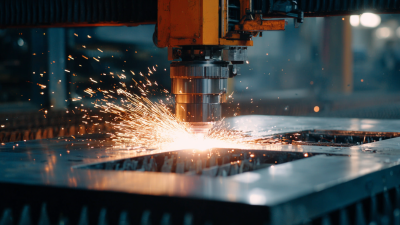
You know, the way manufacturing tech has evolved over the years has really given us some cool tools—like the Laser Welding Cutting Machine. It’s honestly a game-changer for industries that want to boost efficiency and get super precise. With automated workflows, factories can crank out products faster without sacrificing quality. And honestly, once you see these machines in action, the clean edges and minimal thermal distortion—they’re pretty impressive compared to old-school methods. Companies like XYZ Manufacturing have already seen their output jump and costs drop just by switching over to this tech. Of course, it’s not all smooth sailing—you’ve gotta invest in training and make sure you understand how to use the machine properly. Otherwise, you might miss out on some major opportunities for optimization. Diving into the top benefits can really help you see what this tech can do, along with what to watch out for. It’s all about making smart, well-informed decisions, right?

Understanding Laser Welding Cutting Machines and Their Operation
Laser welding cutting machines use advanced technology to join materials. They work by focusing high-intensity laser beams on surfaces. This process melts the material, creating a strong bond. The precision of lasers ensures minimal thermal distortion. This feature is beneficial for delicate components.
Operating these machines requires some expertise. Training is essential for optimal results. Users must understand the settings thoroughly. Incorrect adjustments can lead to defects. Monitoring the operation is crucial to avoid errors.
The machines are versatile and can cut various materials. They are used in industries like automotive and aerospace. With proper care, they can boost productivity. However, maintenance can be challenging. Regular inspections help avoid downtime. Each use teaches something new, emphasizing the need for continuous learning.
High Precision and Accuracy in Metal Fabrication Processes
In the realm of metal fabrication, high precision and accuracy are essential.
Laser welding cutting machines offer unique advantages in this area. They employ focused laser beams to cut and weld metal.
This method minimizes the heat affected zone, reducing distortion. Parts fit together seamlessly. The fine detail achievable with lasers
opens up new design possibilities.
Creating intricate designs requires precision. A laser cutter can produce parts with tighter tolerances than traditional methods. Even
small defects can lead to big problems in assembly. With laser technology, these issues can be greatly reduced.
However, some operators may struggle to use the machines effectively. Training is essential for maximizing benefits.
Quality is key in fabrication. Yet, the transition to laser technology can be challenging. Initial costs might deter some businesses.
It’s vital to evaluate both short-term and long-term gains. Understanding the machine’s full capabilities can yield impressive results.
As with any technology, there is always room for improvement and adaptation. With commitment, manufacturers can fully
leverage the advantages of laser cutting.
Increased Speed and Efficiency Compared to Traditional Methods
Laser welding cutting machines are revolutionizing industry processes. Their speed and efficiency surpass traditional methods. Operators often notice a dramatic decrease in processing time. Complex cuts that once took hours can now be performed in minutes. This is particularly beneficial for high-volume production.
Moreover, laser machines reduce material waste. They provide precise cuts, meaning less scrap and more usable materials. Faster setups and shorter cycle times lead to increased overall productivity. Employees can focus on other tasks instead of waiting for processes to finish.
Not everything is perfect, though. Learning curves exist. Operators need training to maximize these machines' benefits. Some may struggle to adapt to this advanced technology. This shift requires thoughtful implementation and consideration of employee skills. In the long run, laser welding cutting machines could reshape operational efficiency if companies invest adequately in training.
Enhanced Material Compatibility and Versatility for Various Applications
Laser welding cutting machines have revolutionized the manufacturing industry. Their enhanced material compatibility makes them suitable for a range of applications. According to a recent report from Grand View Research, the global laser cutting market is expected to grow by 5.6% annually through 2027. This growth highlights how essential laser technology has become.
Metal, plastic, and even wood can be effectively processed. With laser machines, intricate designs are achievable. This versatility appeals to various sectors like automotive and aerospace. They can cut, weld, and engrave with high precision. As per the Welding Journal, the accuracy of laser cutting reduces waste by up to 35%. However, not all materials respond equally to laser treatment. Some require special attention or settings.
Long-term operational costs are a concern. Maintenance can be tricky, and downtime leads to delays. Companies must ensure they have trained personnel to handle these machines. Misalignment in the early stages may lead to costly mistakes. The technology is promising, but it requires careful implementation and ongoing evaluation. Understanding these dynamics allows businesses to leverage laser technology effectively while being cautious of its challenges.
Reduced Heat-Affected Zone for Improved Material Integrity
Laser welding cutting machines offer various advantages, particularly in reducing the heat-affected zone (HAZ). A smaller HAZ minimizes the risk of warping or distortion in the material. This precision leads to improved structural integrity. When welding metals, traditional methods may create large temperature gradients. Such gradients can weaken the material properties. In contrast, laser welding concentrates energy at a specific point. This process ensures that surrounding areas remain cooler.
Less heat translates to enhanced performance for many materials. For instance, delicate components can withstand the process without damage. In industries like aerospace and automotive, this aspect is crucial. Reduced HAZ also means fewer defects. With improved consistency, manufacturers experience fewer reworks and additional costs. However, achieving this precision requires skilled operators. There’s a learning curve associated with mastering laser technology, which cannot be overlooked.
While laser welding presents clear benefits, it’s not without challenges. Equipment can be expensive and complex. Maintenance and operational costs can add up. Additionally, not all materials respond well to laser welding. This means careful selection is necessary. Operators must understand material behavior under laser exposure. Overall, with the right knowledge and experience, laser welding cutting machines hold great potential for enhancing material integrity.
Lower Operational Costs and Improved Energy Efficiency
Laser welding and cutting machines are revolutionizing industrial operations. Their lower operational costs significantly impact production efficiency. A study by the International Laser Association highlights that these machines can reduce energy consumption by up to 30%. This improvement is especially valuable for manufacturers aiming to cut down on overhead costs while increasing output.
Additionally, laser technology is known for its precision. Unlike traditional methods, laser cutting provides clean edges and reduces material waste. According to industry reports, businesses can save up to 20% on materials when utilizing laser techniques. However, the initial investment in these machines may be high, and some companies face challenges in optimizing their use. Training staff to operate this advanced technology can also be resource-intensive.
Despite these hurdles, the long-term benefits highlight a shift towards energy-efficient manufacturing. The ability to automate and streamline processes leads to not only cost reductions but also improved sustainability. As companies consider moving to laser solutions, evaluating their specific operational needs becomes essential. Each organization must assess whether the transition will yield meaningful returns on investment.
Top 10 Benefits of Using Laser Welding Cutting Machines
| Benefit |
Description |
Impact on Operations |
| Lower Operational Costs |
Laser machines reduce costs associated with material waste and labor. |
Cost savings of up to 30%. |
| Improved Energy Efficiency |
Higher precision cuts mean less energy consumption in comparison to traditional methods. |
Energy savings of 20% or more. |
| Increased Speed |
Laser cutting is significantly faster than conventional cutting methods. |
Production rates can increase by up to 50%. |
| Minimal Material Distortion |
Precise heating generates lower heat affected zones. |
Improved quality and less scrap. |
| Versatility |
Can cut a wide variety of materials with differing thicknesses. |
Adaptability in diverse manufacturing environments. |
| High Precision |
Lasers provide superior cutting accuracy. |
Better product quality and lower rework rates. |
| Automation Friendly |
Easily integrates with automated systems. |
Increases overall operational efficiency. |
| Reduced Noise Levels |
Laser cutting produces less noise than traditional methods. |
Improved workplace environment. |
| Reduction in Waste |
Highly efficient cutting processes optimize material usage. |
Less waste translates to lower costs. |
| Safer Operations |
Laser machines typically have enclosed workspaces to enhance safety. |
Reduction in workplace accidents. |
Environmentally Friendly Techniques and Reduced Waste Production
Laser welding cutting machines are increasingly recognized for their environmentally friendly techniques. Unlike traditional cutting methods that generate significant waste, laser technology offers precision that minimizes material loss. Reports indicate that laser cutting can reduce waste by up to 30%. This efficiency translates to more sustainable manufacturing practices, which is essential for modern industries.
Additionally, laser welding machines use less energy compared to conventional processes. A report from the International Energy Agency highlights that laser systems consume 50% less energy per part than other methods. This reduction not only cuts operational costs but also lowers the carbon footprint of manufacturing activities. However, the initial investment for laser technology can be high, which may deter some businesses from making the switch.
While the benefits are clear, transitioning requires careful consideration. Training staff to operate these machines is crucial for realizing their full potential. Manufacturers must also evaluate their supply chains to incorporate materials compatible with laser cutting. The advancements in this technology are promising, yet the industry must address these challenges to maximize its environmental advantages.
Top 10 Benefits of Using Laser Welding Cutting Machines
Laser welding and cutting machines offer numerous advantages that contribute to efficiency, cost savings, and environmental sustainability. The following bar chart illustrates the key benefits and their respective ratings based on a survey of users.
Innovative Solutions for Jewelry and Metal Processing: Spotlight on the New 3 in 1 Laser Welding Cleaning and Cutting Machine
The jewelry and metal processing industries are continuously evolving, driven by the need for efficiency and precision in production techniques. A standout innovation in this domain is the 3 in 1 Laser Welding Cleaning and Cutting Machine, which combines multiple functionalities into a single, streamlined device. This versatility allows jewelers and metalworkers to perform welding, cleaning, and cutting tasks with optimal ease and precision, greatly enhancing their productivity.
At the heart of this advanced machine is the handheld laser welding unit, which utilizes cutting-edge fiber laser technology. This technology is designed to deliver focused laser energy through optical fibers, allowing for handheld operation that offers unmatched flexibility in various settings. The result is a highly concentrated laser beam capable of melting and solidifying metals in mere seconds, creating strong, high-quality welds. This quick turnaround not only speeds up production times but also reduces the need for extensive post-weld finishing processes, making it an ideal solution for intricate metalwork, such as jewelry fabrication and repair.
Moreover, the machine's capability to simultaneously clean and cut metal materials enhances its appeal across different applications. Users can seamlessly transition between tasks without needing multiple devices, resulting in significant savings on both time and resources. The integration of these functions into one compact unit positions the 3 in 1 Laser Welding Cleaning and Cutting Machine as a game-changer for professionals seeking innovative solutions in metal processing.
FAQS
: They use high-intensity laser beams to join materials. This creates a strong bond through melting the surfaces.
Precision minimizes thermal distortion, making it ideal for delicate components. Less distortion means better quality in finished products.
Yes, training is essential. Users must understand settings to avoid defects and errors during operation.
Laser technology minimizes waste by up to 30%. This efficiency leads to more sustainable manufacturing practices.
No, they use 50% less energy per part compared to conventional methods. This can reduce costs and carbon footprints.
The initial investment can be high. Businesses may hesitate to switch due to the costs involved.
Each use reveals new lessons. Skills improve over time, helping prevent mistakes and enhance productivity.
Maintenance can be challenging, but regular inspections help prevent downtime. Neglecting maintenance can lead to problems.
They must train staff and assess supply chains for compatible materials. Transition requires careful planning and evaluation.
Despite benefits, transitioning can be complex and requires adapting to new processes and training needs.
Conclusion
Laser Welding Cutting Machines offer numerous advantages in modern metal fabrication. They operate with high precision and accuracy, ensuring intricate designs are achieved with minimal errors. Compared to traditional methods, these machines significantly increase speed and efficiency, allowing for quicker production timelines. Their versatility makes them compatible with a wide variety of materials, expanding their application in different industries.
Moreover, Laser Welding Cutting Machines produce a reduced heat-affected zone, which helps maintain material integrity during processing. They also result in lower operational costs and improved energy efficiency, contributing to overall cost savings. Environmentally friendly techniques are another essential benefit, as they reduce waste production, making laser welding cutting a sustainable choice for manufacturing.