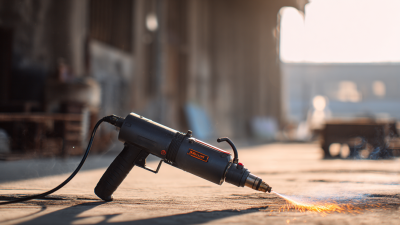
When you’re picking a laser rust removal machine in 2026, it’s not just about wattage and price. If you’re buying from overseas—or selling globally—you’ve gotta look at cleaning speed, beam control, cooling setup, portability, and what kind of after-sales support you’ll actually get. A machine that’s great on steel? It can still mess up thin aluminum or a painted surface. That’s why real production samples really matter.
Dr. Stefan Kaier, a laser-cleaning specialist over at CleanLASER, puts it like this: “Effective laser cleaning removes contamination while protecting the value of the original surface.” That’s really the thinking behind the machines we’re reviewing here. For each option, we look at the practical stuff—how thick the rust is, the duty cycle, scanning width, operator controls, and how easy maintenance access is. Oh, and before you go ahead with a big order, it’s smart to ask for test reports first. Taking that little step can save you from an expensive mismatch.
And safety? Still the big one. Good suppliers usually offer things like enclosure options, tips on protective eyewear, emergency controls, and straightforward operating instructions. They’ll also walk you through service intervals and let you know what replacement parts are available in different regions. If you’re working in a shop or doing mobile maintenance, a compact 1000W system might be just right. For continuous industrial work, though, a 2000W or 3000W unit could be a better fit. That said, more power doesn’t automatically mean better results.
Honestly? There's no such thing as a perfect machine—not really.
So this guide is basically a look at some of the top models out there for automotive restoration, fabrication, marine maintenance, tooling, and industrial prep. It weighs things like measurable performance, how they actually feel to use, whether the supplier seems trustworthy, and what they'll cost you over the long haul. Sure, some specs can look great on paper. But in the real world? Dust extraction, software that doesn't act up, and proper operator training often end up mattering way more. My advice: stay a little skeptical, test with the actual materials you'll use, and don't be surprised if you need to take a second pass before making the final call.

What Are Laser Rust Removal Machines and How Do They Work?
Laser rust removal machines use focused laser energy to separate corrosion from metal surfaces. A pulsed laser delivers short bursts onto rust, paint, or scale. The contaminated layer absorbs more energy than clean metal. It expands rapidly, breaks apart, and leaves as dust or vapor. The base metal usually reflects more of the beam, reducing damage when settings are correct.
The process is highly adjustable. Operators control pulse duration, energy density, repetition rate, scanning speed, and focal distance. A slower scan may improve cleaning, but excessive heat can discolor steel or affect thin edges. In practical workshops, test patches remain essential. Rust thickness, alloy composition, and surface geometry change the result. It is not a magic eraser.
MarketsandMarkets’ 2023 Laser Cleaning Market report estimated the sector at about USD 587.5 million in 2023. It projected growth to approximately USD 1.04 billion by 2028, with a 12.1% compound annual growth rate. This expansion reflects demand for low-contact, precise surface preparation. However, performance depends on engineering, not marketing claims. Industrial users should verify removal rates, substrate temperature, dust capture, and operator training. High-power systems also require controlled work areas, suitable eye protection, interlocks, and compliant fume extraction under applicable laser-safety standards.
Which Laser Technologies Define the Top Machines in 2026?
In 2026, top laser rust removal machines are defined by controlled energy, not headline wattage. Pulsed fiber lasers remain the practical choice for steel frames, tools, and painted assemblies. They deliver short bursts that fracture rust while limiting heat transfer into the base metal. Continuous-wave systems clean faster on thick surfaces, but they demand tighter speed and power control. One careless pass can discolor a thin panel.
Industry forecasts support this shift toward laser cleaning. MarketsandMarkets’ Laser Cleaning Market report projected growth from about USD 587 million in 2023 to over USD 1 billion by 2028. Grand View Research also reported strong double-digit growth expectations through 2030. These estimates differ slightly, which is useful to remember. Market forecasts are not operating guarantees.
The strongest 2026 platforms will combine pulsed fiber sources, adjustable pulse width, galvanometer scanning, and real-time power feedback. A 1064 nm wavelength suits many common metals, while shorter wavelengths can improve absorption on selected coatings. Dust extraction matters equally. A bright beam and visible sparks do not prove safe cleaning. Buyers should test a 10-by-10-centimeter area, measure surface temperature, and inspect roughness afterward. In field trials, I would also compare cleaning speed after ten repeated passes. A machine may look impressive during a demonstration, yet produce uneven edges or leave embedded residues. That weakness deserves honest attention.
2026 Top Laser Rust Removal Machines for Global Buyers
Which Laser Technologies Define the Top Machines in 2026?
Pulsed fiber lasers are widely used for precision rust removal because short pulses can lift corrosion while limiting heat input to the base material. Continuous-wave fiber lasers provide higher average power for large steel structures and heavy rust, but they require tighter control of scanning speed and heat accumulation. MOPA fiber systems offer adjustable pulse parameters, while 355 nm ultraviolet systems are suited to delicate or heat-sensitive surfaces at lower power levels.
The chart uses representative industrial system power levels: pulsed and MOPA fiber systems commonly range from approximately 20–300 W, continuous-wave fiber systems from approximately 1,000–3,000 W, and ultraviolet systems from approximately 5–30 W. Actual specifications vary by application, pulse settings, optics, and safety configuration.
How to Compare Power, Pulse Settings, Speed, and Cleaning Precision
2026 Top Laser Rust Removal Machines for Global Buyers
How to Compare Power, Pulse Settings, Speed, and Cleaning Precision
Power is only the starting point when comparing laser rust removal machines. A 100W pulsed system may remove thin oxidation efficiently, while a lower-power unit can protect delicate steel edges more effectively. Grand View Research estimates the laser cleaning market will grow at about 5.8% annually through 2030, reflecting wider industrial adoption. However, market growth does not guarantee suitable machine selection.
Pulse duration and repetition rate control heat, impact, and surface texture. Nanosecond pulses usually balance rust removal with manageable thermal influence. Higher repetition rates can improve speed, but they may also increase heat buildup on thin parts. Watch the surface temperature. That detail matters.
Cleaning speed depends on scan width, line overlap, rust thickness, and operator movement. A larger spot can cover more area, but it may reduce precision around welds or engraved markings. In practical trials, compare square metres per hour using identical rust panels. Do not trust brochure speed alone. I would test three passes, not one.
Precision comes from stable focus, adjustable pulse energy, and repeatable scanning. ISO 11553 and IEC 60825-1 provide relevant laser safety frameworks, while technical inspection should follow documented workplace controls. Reports from MarketsandMarkets identify automation and higher process control as key market drivers. Still, every surface reacts differently. A machine that performs well on structural steel may struggle with a thin, painted component. That is where careful testing beats confident assumptions.
2026 Top Laser Rust Removal Machines for Global Buyers - How to Compare Power, Pulse Settings, Speed, and Cleaning Precision
| Machine Configuration |
Laser Type |
Rated Power |
Pulse Settings |
Typical Pulse Energy |
Typical Cleaning Speed |
Cleaning Precision |
Scan Width |
Recommended Materials and Tasks |
Key Buying Considerations |
| Compact Precision Cleaner |
Q-switched pulsed fiber |
50 W |
20–60 kHz
2–200 ns |
0.8–1.5 mJ |
0.3–1.5 m²/h |
Very high; suitable for localized rust and delicate surfaces |
10–100 mm |
Small metal parts, tools, molds, thin coatings, restoration work |
Best for precision
Lowest heat input, but slower on large surfaces |
| Portable General-Purpose Cleaner |
Q-switched pulsed fiber |
100 W |
20–100 kHz
2–200 ns |
1.0–2.0 mJ |
0.6–3.0 m²/h |
High; good control of rust, paint residue, and light oxidation |
10–110 mm |
Maintenance, fabricated parts, welding residue, machine components |
Good balance of portability, precision, and operating cost |
| Heavy-Duty Pulsed Cleaner |
Q-switched pulsed fiber |
200 W |
20–100 kHz
2–200 ns |
1.5–3.0 mJ |
1.0–5.0 m²/h |
High; effective on heavier rust with manageable thermal impact |
10–120 mm |
Automotive parts, steel structures, molds, industrial repair work |
Strong all-round option
Requires stable cooling and adequate electrical supply |
| High-Power Pulsed Cleaner |
Q-switched pulsed fiber |
300 W |
20–100 kHz
2–200 ns |
2.0–4.0 mJ |
1.5–7.0 m²/h |
High; faster removal while retaining selective cleaning capability |
10–130 mm |
Large components, thick rust layers, shipyard and industrial fabrication |
High productivity
Confirm fume extraction, duty cycle, and operator safety controls |
| High-Speed Continuous-Wave Cleaner |
Continuous-wave fiber |
1,000 W |
Continuous output
Optional modulation |
Not applicable |
3.0–12.0 m²/h |
Medium to high; depends strongly on travel speed and heat management |
20–300 mm |
Large steel surfaces, heavy scale, structural components, thick coatings |
Best for speed
Higher thermal load; avoid thin or heat-sensitive substrates |
| High-Power Continuous-Wave Cleaner |
Continuous-wave fiber |
1,500 W |
Continuous output
Optional modulation |
Not applicable |
5.0–18.0 m²/h |
Medium; optimized for robust substrates and broad-area cleaning |
20–350 mm |
Heavy rust, mill scale, large steel plates, beams, and industrial equipment |
High throughput and lower cost per square metre on large workpieces |
| Industrial Continuous-Wave Cleaner |
Continuous-wave fiber |
2,000 W |
Continuous output
Optional modulation |
Not applicable |
7.0–25.0 m²/h |
Medium; requires process trials to limit substrate heating |
20–400 mm |
Large fabricated steel, containers, pipelines, ship components, production lines |
Maximum throughput
Needs robust cooling, ventilation, power infrastructure, and safety zoning |
| Dual-Mode Production Cleaner |
Pulsed fiber or selectable CW fiber |
300–1,000 W |
20–100 kHz pulsed mode
or continuous mode |
Up to approximately 4.0 mJ in pulsed mode |
1.5–12.0 m²/h |
High in pulsed mode; medium to high in CW mode |
10–300 mm |
Mixed production work involving precision parts and large steel surfaces |
Most versatile
Higher purchase price and more complex process qualification |
Performance figures are representative operating ranges for commonly available industrial laser-cleaning configurations. Actual removal rate and surface quality vary with rust thickness, substrate, coating type, laser focus, scan pattern, operator speed, and required surface finish. Buyers should request sample testing and verify laser class, fume extraction, cooling, warranty, electrical requirements, and local compliance before purchase.
Which Materials and Rust-Removal Applications Suit Each Machine?
2026 Top Laser Rust Removal Machines for Global Buyers
Pulsed fiber laser machines suit thin steel parts, tools, molds, and painted repair zones. Their short bursts remove rust while limiting heat transfer. Thin steel needs restraint. A 20–100 watt system often fits light corrosion, precision maintenance, and workshop repairs. It also suits stainless steel when operators protect the original surface finish. Aluminum does not form iron rust, but these machines can remove oxidation and surface contamination with careful testing.
Higher-power continuous-wave machines work better on thick carbon-steel plates, beams, pipes, and heavy industrial equipment. They remove dense scale faster across larger areas. Heat changes everything. Excessive power can discolor steel, distort thin sections, or damage nearby coatings. Water-cooled systems are more suitable for long production shifts, while air-cooled units support mobile repairs and shorter cleaning jobs.
Compact pulsed machines are practical for vehicle components, agricultural tools, and restoration work. Long-pulse or higher-power models fit bridges, storage tanks, and large fabricated structures, provided ventilation and surface controls are adequate. Reflective metals require extra caution because laser energy can return toward the optical path. A test patch should confirm power, scan speed, and focus before full cleaning. Some coatings release hazardous fumes, so extraction and protective equipment remain essential. In real workshops, the fastest setting is not always the safest or cleanest. Machine choice still depends on rust depth, material thickness, access, and the finish required afterward.
What Should Global Buyers Check Before Choosing a Machine?
Global buyers should judge laser rust removal machines by verified performance, not attractive power ratings. The 2024 MarketsandMarkets report estimates the laser cleaning market will grow strongly through 2028, but market forecasts differ widely. Treat them as directional, not guaranteed. Ask suppliers for test results on your actual steel grade, rust thickness, and coating condition.
Check laser wavelength, pulse duration, scanning speed, and beam-control stability. A higher wattage does not automatically mean faster cleaning. Confirm whether the machine includes fume extraction, enclosure options, emergency stops, and protective eyewear. IEC 60825-1 provides the core classification framework for laser safety. OSHA also identifies airborne particles and eye exposure as major workplace hazards. The workspace matters.
Request measured energy consumption, duty cycle, cooling requirements, and replacement-part costs. One supplier may quote cleaning speed on light surface rust, while your parts carry oil, scale, and uneven corrosion. Those conditions can change results sharply. Test coupons are essential. Small details matter.
Ask for operator training, service response times, calibration procedures, and documentation in your working language. Check conformity records for the destination market, rather than accepting vague “international certification” claims. A spreadsheet can lie. I would also compare noise, footprint, cable length, and portability during a real production trial. The best machine is not always the most powerful one; it is the one that delivers repeatable results with controlled risk and realistic ownership costs.
How Do Safety Standards, Certifications, and Regional Rules Differ?
For global buyers comparing top laser rust removal machines in 2026, safety compliance deserves more attention than wattage alone. A high-power pulse can remove rust quickly, but reflected light may injure unprotected eyes within seconds. Look for an accessible emergency stop, sealed beam delivery, interlocked covers, key control, warning lights, and a clearly marked laser classification.
Different regions apply different rules. IEC 60825-1 is widely used for laser classification and user safety. European buyers may need CE documentation, a technical file, risk assessment, and compliance with applicable machinery, electrical, and electromagnetic requirements. In the United States, buyers should check FDA/CDRH requirements, workplace controls, and local occupational safety rules. Other markets may recognize national versions of IEC standards, but acceptance is not automatic.
Ask the supplier for test reports, declarations, user manuals, and serial-number traceability. Verify that the documents match the exact model, laser source, and configuration. A certificate for a control cabinet may not cover the complete machine. During a site inspection, check whether fumes are captured at the work point, cables are protected, and operators can access the stop button immediately. Training records matter too.
Rules change. My own purchasing checklist once treated CE marking as sufficient, which was an unsafe assumption. Importers, local safety engineers, and authorities should confirm current requirements before shipment, installation, and routine operation.
What Are the Long-Term Costs, Maintenance Needs, and Supplier Services?
A laser rust removal machine costs more than its purchase price. Buyers should model electricity, compressed air, extraction filters, protective windows, optics, software, and operator training. The U.S. Department of Energy reports that compressed-air leaks can waste 20–30% of compressor output. That loss becomes visible during long cleaning shifts. Check airflow meters monthly.
Laser source life is important, but it is not the only maintenance issue.
Dust can cloud protective windows within hours in heavy rust removal. Dirty windows reduce output and may increase thermal stress. Filters need scheduled replacement. Cooling systems also require inspection, especially in hot workshops. Small details matter. A maintenance log should record working hours, power levels, filter changes, and fault codes.
Supplier support can decide the real ownership cost. Request documented response times, spare-part availability, training hours, and repair procedures before signing an order. ISO 11553-1 addresses safety requirements for laser processing machines, so supplier training should cover enclosure controls, interlocks, extraction, and protective equipment. Market forecasts vary widely, and published growth rates should not replace a site-specific cost model. Compare three operating scenarios: one shift, two shifts, and seasonal use. I would also allow a contingency budget of 10–15% for the first year. That estimate is practical, not universal. A supplier promising zero maintenance deserves careful questioning.
Laser Cleaning Market Insights from Grand View Research and MarketsandMarkets Reports: Non-Damaging Surface Treatment Equipment
The laser cleaning market is gaining attention as manufacturers seek non-damaging surface treatment equipment that improves productivity while protecting valuable substrates. By using controlled laser energy, this type of system can remove rust spots, oxide scale, dirt, and coatings without relying on water or chemical solvents. The process produces no liquid waste, helps reduce environmental pollution, and offers a safe, reliable alternative for workshops, maintenance operations, and industrial production lines.
A lightweight handheld cleaning head makes the equipment easy to operate in confined or complex areas, while its straightforward controls support efficient daily use. The system can also be integrated with automated equipment for continuous, repeatable processing. Its integrated structure simplifies installation and handling, reducing the need for additional cleaning accessories. With adjustable cleaning performance for different materials and contamination levels, the equipment is suitable for metal preparation, restoration, machinery maintenance, and surface treatment before coating or welding, while maintaining the original condition of the substrate.
FAQS
Pulsed fiber laser machines suit thin steel, tools, molds, and painted repair areas. Short bursts limit heat transfer. A 20–100 watt system may fit light corrosion and workshop maintenance. Test the original surface finish carefully.
Higher-power continuous-wave machines suit thick carbon-steel plates, beams, pipes, and heavy equipment. They remove dense scale faster across wide surfaces. Excessive heat can discolor steel or distort thin sections. Power needs restraint.
Aluminum does not develop iron rust. However, laser systems can remove oxidation and surface contamination. Use a small test patch first. Reflective surfaces need extra caution.
Do not judge performance by wattage alone. Ask for test results using your steel grade, rust depth, oil, and coating condition. A quoted speed may be optimistic. Test real samples.
Check emergency stops, protective eyewear, enclosure options, and fume extraction. Some coatings release hazardous fumes during cleaning. Ventilation must match the workspace. Eye exposure remains a serious risk.
Air-cooled systems suit mobile repairs and shorter cleaning jobs. Water-cooled systems support longer production shifts. Cooling needs change with power, workload, and workshop temperature. Do not guess.
Include electricity, compressed air, extraction filters, protective windows, optics, software, and training. Heavy rust can cloud protective windows within hours. Dirty windows reduce output and increase thermal stress. Maintenance is not optional.
Request response times, spare-part availability, training hours, calibration procedures, and repair instructions. Keep a log of operating hours, power settings, filter changes, and fault codes. Compare one-shift, two-shift, and seasonal use. A 10–15% first-year contingency may help, but it is not universal.
Conclusion
A Laser Rust Removal Machine uses focused laser energy to remove rust, paint, oxides, and other surface contaminants with minimal contact and reduced use of chemicals. In 2026, leading machine designs may use pulsed or continuous-wave laser technologies, with power, pulse width, frequency, scanning speed, and beam control determining cleaning efficiency and surface precision. Buyers should match these settings to the material and application, such as steel structures, automotive components, molds, tools, or delicate metal parts, while avoiding unnecessary heat or surface damage.
Global buyers should compare working speed, cleaning width, portability, control systems, energy consumption, and operator protection. Before purchasing, they should verify electrical compatibility, laser safety classification, protective enclosures, training requirements, and certifications applicable to the destination region. Long-term evaluation should include replacement parts, lens and filter maintenance, calibration, warranty coverage, technical support, shipping, installation, and total operating costs. A reliable supplier should provide clear specifications, safety documentation, service guidance, and responsive after-sales support.